Germany
All the Old KnivesGermany enters the novel’s hostage crisis not as the aircraft’s destination but as a government whose decisions shape the fate of those aboard Royal Jordanian Flight 127. Three of the five prisoners demanded by Aslim Taslam are held in Germany, and the question of whether they will be released becomes inseparable from the threat to the hostages’ lives.
Germany in the Crisis
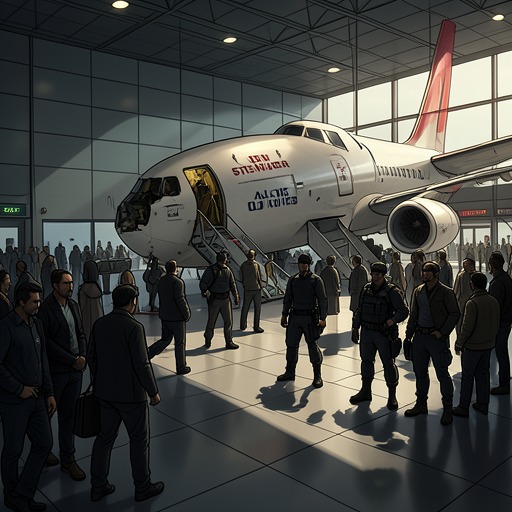
An intelligence warning predicts an airline-related event on a flight headed for Austria or Germany, with Amman among the possible departure points. The hijacked flight ultimately lands in Vienna, not Germany, but German-held prisoners make the country a central party to the crisis. The hijackers demand the release of five prisoners within forty-eight hours: two held in Austria and three in Germany.
The plane carries twenty-nine Germans, alongside seventeen Americans whose presence is still being verified. The German passengers make the government’s response an immediate concern for the American intelligence team, while the distribution of prisoners across Germany and Austria makes the negotiations cross-border from the outset.
The German Government’s Position
At first, the team has no firm answer about whether Germany and Austria will concede. Vick weighs the political circumstances: Angela Merkel has been in office only a few months, and he suspects Germany may give in, while he reads Austrian president Heinz Fischer as facing a different political calculation. Celia challenges his assessment of Fischer, noting that the election is over and coalition negotiations will not change his position in the way Vick assumes.
The assessment of Germany becomes more definite when Vick reports that the BND will transfer its prisoners to Vienna as a gesture of goodwill, but Merkel will not release them. She regards freeing them as political suicide. Moving the prisoners therefore signals cooperation without meeting the hijackers’ demand; it does not resolve the threat to the passengers.
Germany and the Proposed Assault
The refusal to release the German prisoners sharpens the crisis around the forty-eight-hour deadline. Henry warns that if the team does not get aboard the plane soon, the situation will become a bloodbath. Owen agrees that, if Germany and Austria will not meet the demands, storming the aircraft before the deadline may be the only remaining option. Vick draws a boundary around the American role: the team will advise the Austrians, not conduct the assault itself.
That advice must account for the public setting of the standoff. Celia points out that ORF cameras are watching the aircraft from the airport fence, and that the hijackers have summoned media attention rather than seeking secrecy. The cameras are not in Germany, but they help frame the wider crisis in which German policy, Austrian action, and the passengers’ safety are linked. In these scenes, Germany’s importance lies in the consequences of its refusal: it closes off the negotiated outcome the hijackers demand and intensifies pressure for a dangerous intervention.